Reading fluid level marks without rushing
Reading fluid level marks without rushing
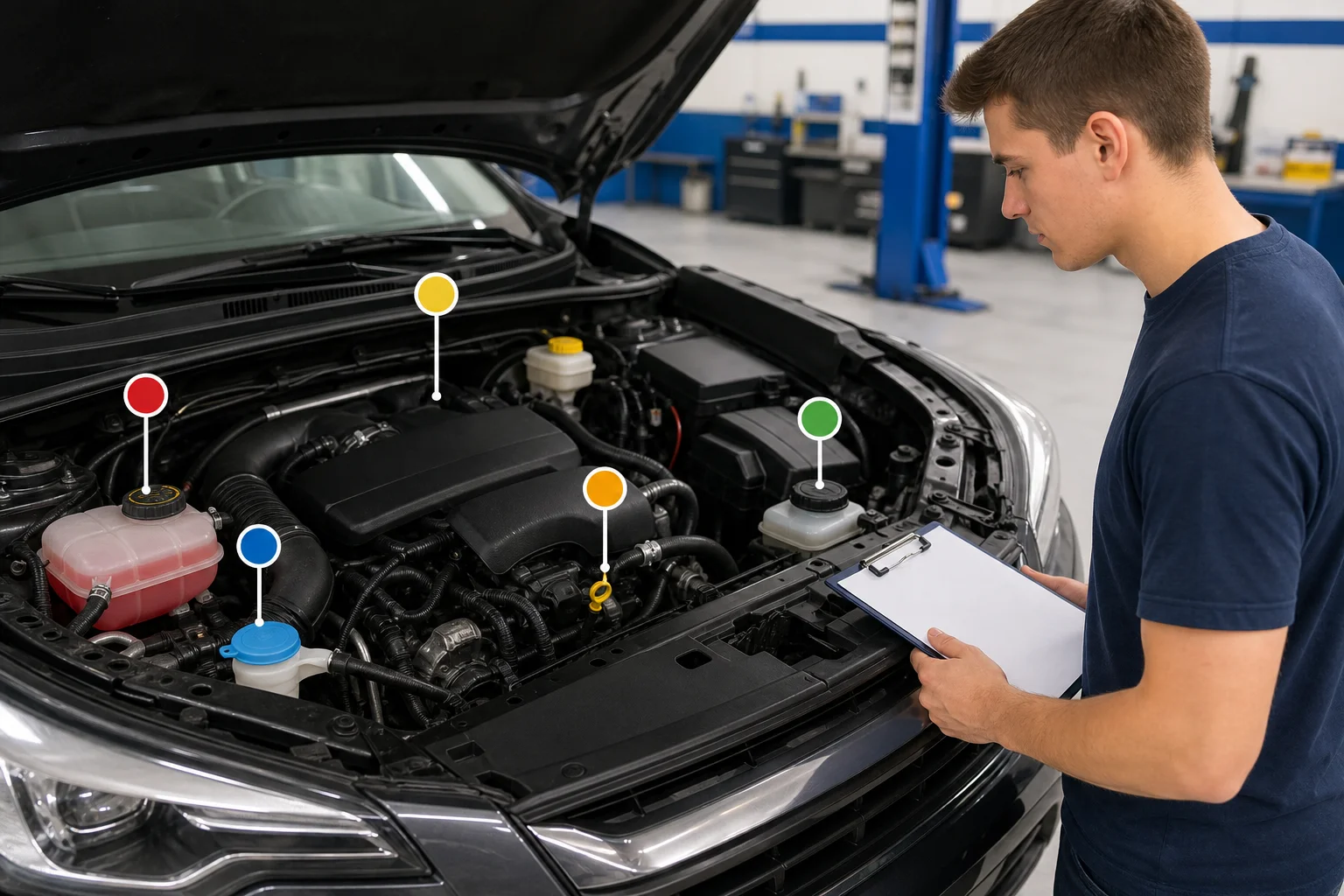
Multipoint inspection forms often list fluid reservoirs on a single row, but the marks can look similar when you skim quickly. This article describes a three-pass reading method used in our learning modules — not a substitute for a certified technician evaluation.
The first pass identifies column headers: engine oil, coolant, brake fluid, power steering, and washer fluid may appear in different orders depending on the shop template.
First pass: column orientation
Before reading numbers, locate the vehicle diagram that maps each reservoir to a body zone. Educational copies use generic silhouettes without brand logos.
Write down which columns you expect to see so missing fields stand out during the second pass.
Second pass: level indicators and units
Note whether levels are marked as full, add, or low rather than numeric values. Some reports use color codes; the module explains what each label means in neutral terms.
Questions for your service advisor can be drafted in a notebook during this pass.
Third pass: footnotes and cross-references
Small print often points to manufacturer specifications. Keep the inspection form and owner manual open side by side when studying at home.
AI drafting and human proofreading
Automated tools may reorder bullet lists or highlight repeated phrases. Published articles receive manual glossary review before they appear on the portal.
Financial planning literacy in fluid rows
Line items for fluid top-offs appear as separate rows on estimates. Learning to read structure helps you ask clarifying questions without comparing shop pricing labels.
Closing note
Calm reading of fluid fields prepares thoughtful questions; authoritative answers remain with certified technicians and manufacturer documentation.
Extended reference notes (part 1)
Readers on haloclinest often revisit glossary cards after completing a first pass through a module. The practice reinforces neutral vocabulary for service visit reports: odometer columns, fluid level rows, brake pad thickness fields, tire tread depth notes, battery load test references, and maintenance sign-off sections kept separate. When comparing two PDFs from different dates, focus on which fields changed — mileage intervals, coolant color notes, pad measurements, or technician observation comments — rather than interpreting severity independently. Educational copy describes how certified facilities document findings; it does not certify your vehicle or authorize repairs. If manufacturer service bulletins or shop requirements apply, follow official channels. Study blocks remain available around the clock so you can align terminology across basic maintenance vocabulary, engine check procedures, fluid control logs, brake inspection fields, tire control checklists, auto electrical load tests, maintenance planning calendars, vehicle diagnostics report language, usage tips for daily driving, and practical instruction formats tracks at your own pace.
Extended reference notes (part 2)
Readers on haloclinest often revisit glossary cards after completing a first pass through a module. The practice reinforces neutral vocabulary for service visit reports: odometer columns, fluid level rows, brake pad thickness fields, tire tread depth notes, battery load test references, and maintenance sign-off sections kept separate. When comparing two PDFs from different dates, focus on which fields changed — mileage intervals, coolant color notes, pad measurements, or technician observation comments — rather than interpreting severity independently. Educational copy describes how certified facilities document findings; it does not certify your vehicle or authorize repairs. If manufacturer service bulletins or shop requirements apply, follow official channels. Study blocks remain available around the clock so you can align terminology across basic maintenance vocabulary, engine check procedures, fluid control logs, brake inspection fields, tire control checklists, auto electrical load tests, maintenance planning calendars, vehicle diagnostics report language, usage tips for daily driving, and practical instruction formats tracks at your own pace.
Extended reference notes (part 3)
Readers on haloclinest often revisit glossary cards after completing a first pass through a module. The practice reinforces neutral vocabulary for service visit reports: odometer columns, fluid level rows, brake pad thickness fields, tire tread depth notes, battery load test references, and maintenance sign-off sections kept separate. When comparing two PDFs from different dates, focus on which fields changed — mileage intervals, coolant color notes, pad measurements, or technician observation comments — rather than interpreting severity independently. Educational copy describes how certified facilities document findings; it does not certify your vehicle or authorize repairs. If manufacturer service bulletins or shop requirements apply, follow official channels. Study blocks remain available around the clock so you can align terminology across basic maintenance vocabulary, engine check procedures, fluid control logs, brake inspection fields, tire control checklists, auto electrical load tests, maintenance planning calendars, vehicle diagnostics report language, usage tips for daily driving, and practical instruction formats tracks at your own pace.
Extended reference notes (part 4)
Readers on haloclinest often revisit glossary cards after completing a first pass through a module. The practice reinforces neutral vocabulary for service visit reports: odometer columns, fluid level rows, brake pad thickness fields, tire tread depth notes, battery load test references, and maintenance sign-off sections kept separate. When comparing two PDFs from different dates, focus on which fields changed — mileage intervals, coolant color notes, pad measurements, or technician observation comments — rather than interpreting severity independently. Educational copy describes how certified facilities document findings; it does not certify your vehicle or authorize repairs. If manufacturer service bulletins or shop requirements apply, follow official channels. Study blocks remain available around the clock so you can align terminology across basic maintenance vocabulary, engine check procedures, fluid control logs, brake inspection fields, tire control checklists, auto electrical load tests, maintenance planning calendars, vehicle diagnostics report language, usage tips for daily driving, and practical instruction formats tracks at your own pace.