Anonymized cases: how comparison tables are built
Anonymized cases: how comparison tables are built
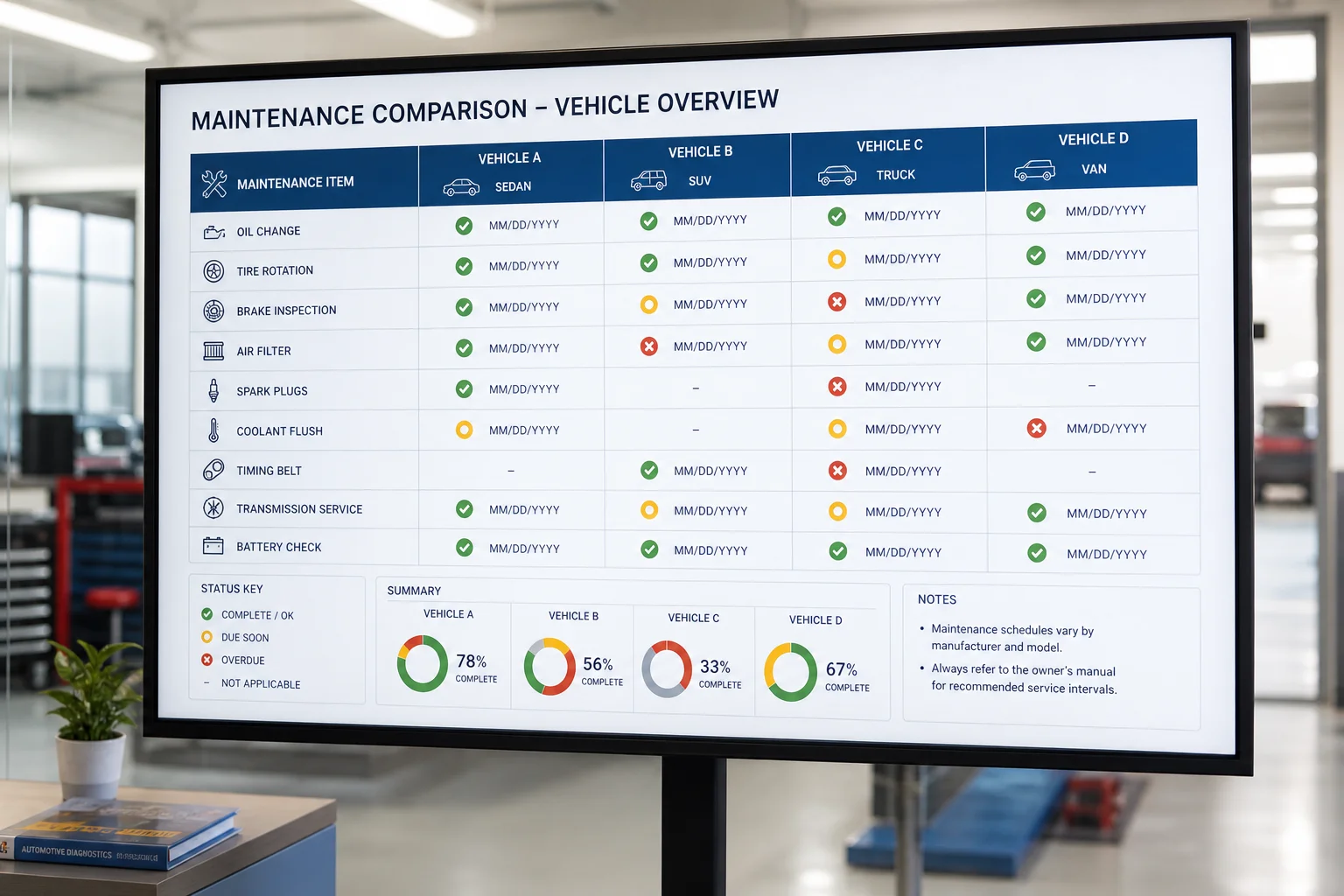
Case-style tables on our portal show how documentation structure shifts when mileage intervals change or when seasonal prep items are added. All examples remove personal identifiers and shop brand names.
Selecting parameters
Editors choose three to five fields that commonly vary: odometer reading, last oil change date, tire rotation mark, and brake pad notation column.
Building rows without personal data
Sample rows use fictional vehicle categories — compact sedan, small SUV — rather than VIN numbers or license plates.
Why readers use comparison tables
Tables train attention on what changed between two visits, which supports note-taking habits for your own maintenance journal.
AI assistance in table assembly
Algorithms may align column widths or suggest row labels; editors verify every cell before publication.
Financial planning literacy
When tables include estimate excerpts, amounts appear as illustrative fields tied to document structure, not as predictions about your invoice.
Using cases responsibly
Anonymized walkthroughs describe format only. Apply questions to your certified shop using your actual service history.
Extended reference notes (part 1)
Readers on haloclinest often revisit glossary cards after completing a first pass through a module. The practice reinforces neutral vocabulary for service visit reports: odometer columns, fluid level rows, brake pad thickness fields, tire tread depth notes, battery load test references, and maintenance sign-off sections kept separate. When comparing two PDFs from different dates, focus on which fields changed — mileage intervals, coolant color notes, pad measurements, or technician observation comments — rather than interpreting severity independently. Educational copy describes how certified facilities document findings; it does not certify your vehicle or authorize repairs. If manufacturer service bulletins or shop requirements apply, follow official channels. Study blocks remain available around the clock so you can align terminology across basic maintenance vocabulary, engine check procedures, fluid control logs, brake inspection fields, tire control checklists, auto electrical load tests, maintenance planning calendars, vehicle diagnostics report language, usage tips for daily driving, and practical instruction formats tracks at your own pace.
Extended reference notes (part 2)
Readers on haloclinest often revisit glossary cards after completing a first pass through a module. The practice reinforces neutral vocabulary for service visit reports: odometer columns, fluid level rows, brake pad thickness fields, tire tread depth notes, battery load test references, and maintenance sign-off sections kept separate. When comparing two PDFs from different dates, focus on which fields changed — mileage intervals, coolant color notes, pad measurements, or technician observation comments — rather than interpreting severity independently. Educational copy describes how certified facilities document findings; it does not certify your vehicle or authorize repairs. If manufacturer service bulletins or shop requirements apply, follow official channels. Study blocks remain available around the clock so you can align terminology across basic maintenance vocabulary, engine check procedures, fluid control logs, brake inspection fields, tire control checklists, auto electrical load tests, maintenance planning calendars, vehicle diagnostics report language, usage tips for daily driving, and practical instruction formats tracks at your own pace.
Extended reference notes (part 3)
Readers on haloclinest often revisit glossary cards after completing a first pass through a module. The practice reinforces neutral vocabulary for service visit reports: odometer columns, fluid level rows, brake pad thickness fields, tire tread depth notes, battery load test references, and maintenance sign-off sections kept separate. When comparing two PDFs from different dates, focus on which fields changed — mileage intervals, coolant color notes, pad measurements, or technician observation comments — rather than interpreting severity independently. Educational copy describes how certified facilities document findings; it does not certify your vehicle or authorize repairs. If manufacturer service bulletins or shop requirements apply, follow official channels. Study blocks remain available around the clock so you can align terminology across basic maintenance vocabulary, engine check procedures, fluid control logs, brake inspection fields, tire control checklists, auto electrical load tests, maintenance planning calendars, vehicle diagnostics report language, usage tips for daily driving, and practical instruction formats tracks at your own pace.
Extended reference notes (part 4)
Readers on haloclinest often revisit glossary cards after completing a first pass through a module. The practice reinforces neutral vocabulary for service visit reports: odometer columns, fluid level rows, brake pad thickness fields, tire tread depth notes, battery load test references, and maintenance sign-off sections kept separate. When comparing two PDFs from different dates, focus on which fields changed — mileage intervals, coolant color notes, pad measurements, or technician observation comments — rather than interpreting severity independently. Educational copy describes how certified facilities document findings; it does not certify your vehicle or authorize repairs. If manufacturer service bulletins or shop requirements apply, follow official channels. Study blocks remain available around the clock so you can align terminology across basic maintenance vocabulary, engine check procedures, fluid control logs, brake inspection fields, tire control checklists, auto electrical load tests, maintenance planning calendars, vehicle diagnostics report language, usage tips for daily driving, and practical instruction formats tracks at your own pace.
Extended reference notes (part 5)
Readers on haloclinest often revisit glossary cards after completing a first pass through a module. The practice reinforces neutral vocabulary for service visit reports: odometer columns, fluid level rows, brake pad thickness fields, tire tread depth notes, battery load test references, and maintenance sign-off sections kept separate. When comparing two PDFs from different dates, focus on which fields changed — mileage intervals, coolant color notes, pad measurements, or technician observation comments — rather than interpreting severity independently. Educational copy describes how certified facilities document findings; it does not certify your vehicle or authorize repairs. If manufacturer service bulletins or shop requirements apply, follow official channels. Study blocks remain available around the clock so you can align terminology across basic maintenance vocabulary, engine check procedures, fluid control logs, brake inspection fields, tire control checklists, auto electrical load tests, maintenance planning calendars, vehicle diagnostics report language, usage tips for daily driving, and practical instruction formats tracks at your own pace.